
Officially opened! EuroTier 2026 the global meeting place for professional livestock farming
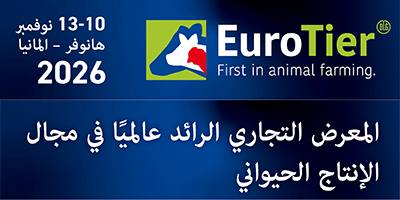
Hubertus Paetow, President of DLG (German Agricultural Society), and distinguished guests from industry and politics highlight EuroTier 2026 as the world’s leading meeting place for professional livestock farming – Guiding theme: “Intelligence in Animal Farming” – Energy Decentral 2026 showcases innovative concepts for decentralized and sustainable renewable energy solutions – 10-13 November in Hanover, Germany.
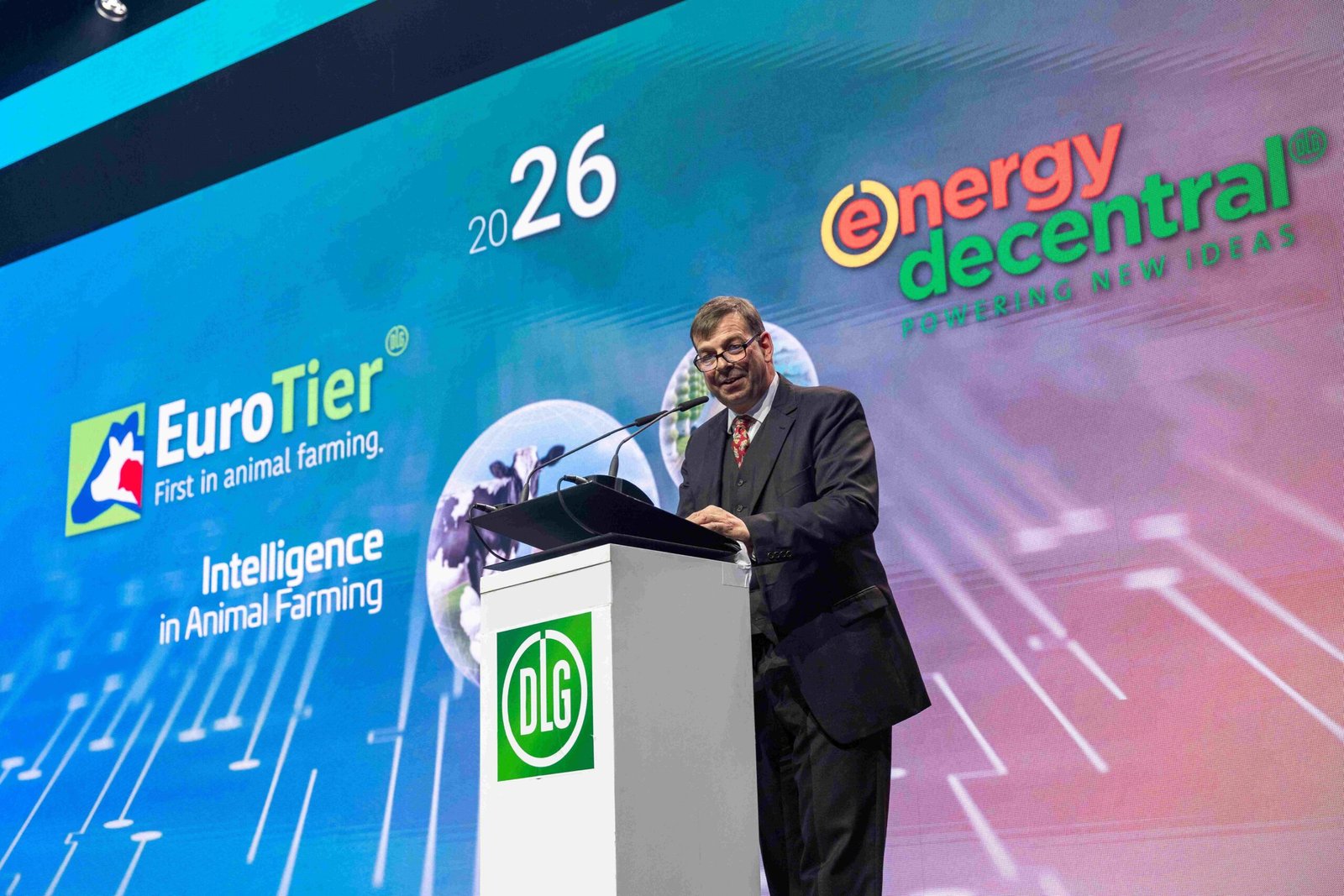
Rising costs, volatile markets, trade barriers and growing societal expectations are placing livestock producers worldwide under increasing pressure. At the opening of EuroTier 2026 in Hanover, Germany, Hubertus Paetow, President of DLG (German Agricultural Society), organizer of the EuroTier and EnergyDecentral trade fairs, underlined that livestock farming can remain competitive in international markets only through sustainable productivity gains. Achieving this requires innovation, open export markets and strong entrepreneurial drive.
Under the guiding theme “Intelligence in Animal Farming”, more than 2,100 exhibitors from 55 countries, two-thirds of them from outside Germany, are this week showcasing solutions that improve efficiency, animal welfare and resource conservation. Held alongside EuroTier, EnergyDecentral 2026 demonstrates how decentralized renewable energy generation and energy storage solutions can strengthen the resilience and value creation of agricultural businesses.
DLG President Hubertus Paetow: Entrepreneurial Drive and Productivity Ensure Competitiveness in International Markets
“Livestock farming businesses face a whole range of challenges, each of which on its own would already demand the full attention, commitment and expertise of farmers and agricultural entrepreneurs,” said DLG President Hubertus Paetow during the opening ceremony of EuroTier and EnergyDecentral 2026 on Tuesday evening in Hanover.
The livestock sector is currently under pressure, amid challenging market conditions worldwide. Farms must continue to increase productivity while using fewer resources. Only in this way can they remain competitive in international markets.
“And livestock farming must remain internationally competitive, because without internationally competitive livestock production, the desired level of food security in times of crisis cannot be achieved,” Paetow stressed.
Paetow called for a “competitive edge through innovation”, both for livestock farming as a whole and particularly for Germany’s pig sector. He described the current situation of the sector as critical. Nevertheless, he expressed confidence that the goal of restoring a competitive pig sector can succeed if government, public authorities, processors and livestock farmers work together toward a common objective.
The outlook for global livestock production varies by sector, Paetow continued. Competition for pork export markets has become particularly fierce following declining demand in the key importing market of China. The poultry market, by contrast, is expected to see continued growth worldwide, as poultry meat remains a comparatively affordable source of protein. Paetow described the sector as a bright spot within livestock farming. In the beef sector, production is increasing globally, while supplies within the European Union are becoming tighter. Against this backdrop, livestock producers must continue to improve productivity, animal health and resource efficiency while remaining flexible in responding to shifting trade flows and market conditions.
Paetow emphasized that EuroTier provides an important platform for international exchange. At the stands of more than 2,100 exhibitors from 55 countries, “innovative and proven solutions alike, from slatted flooring to artificial intelligence, are waiting to be discovered and applied to drive progress on farms around the world.”
Under the guiding theme “Intelligence in Animal Farming”, EuroTier and EnergyDecentral help strengthen cooperation across global markets. Paetow also expressly acknowledged the export strategy of Germany’s Federal Ministry of Food and Agriculture. The opening of markets in the Philippines, as well as promising negotiations with China, Japan and South Africa, are making an important contribution to market stability. EuroTier and EnergyDecentral support these efforts by encouraging dialogue among political and business delegations from countries ranging from Ukraine, India and Brazil to Mexico.
German Federal Minister of Agriculture Alois Rainer: Supporting and Strengthening the Industry’s Capacity for Innovation
German Federal Minister of Agriculture Alois Rainer highlighted the importance of EuroTier as a platform for future-oriented innovation in the agricultural sector:
“EuroTier 2026 demonstrates the innovation and creativity with which the agricultural sector is moving forward. The Federal Ministry of Agriculture is also represented here. Together with partners from administration, research and academia, we are showcasing a wide range of digital solutions for the further development of livestock farming. We are presenting concrete results from our experimental fields and innovation programmes.
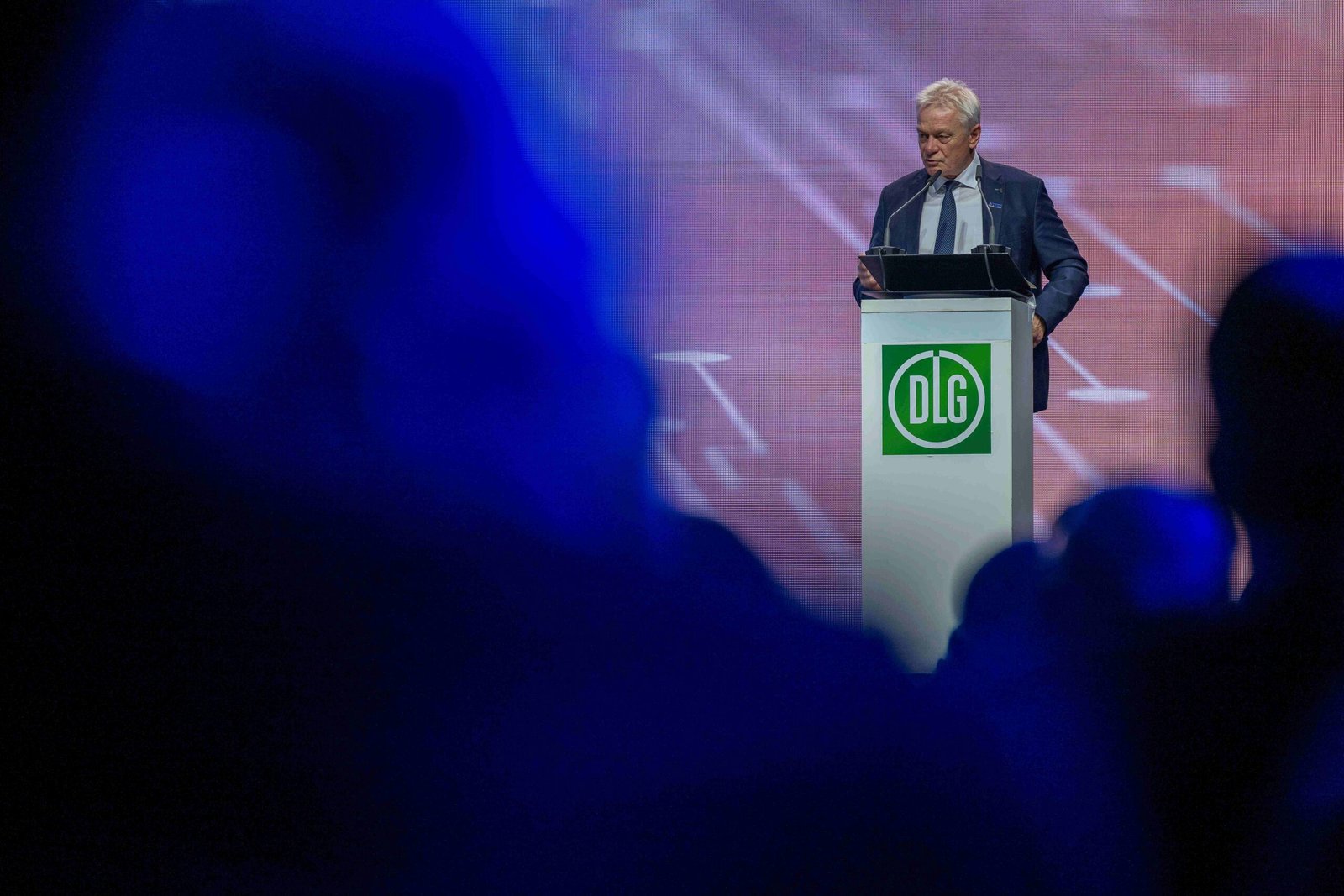
Farmers do not invest in technology because it is ‘nice to have’. They invest because they carry responsibility and believe in their future and that of the next generation. However, they can only invest if their businesses are profitable. No farm can permanently absorb higher costs for energy, fertilizer, labour and animal welfare if revenues do not keep pace.
For this reason, the Federal Government has introduced targeted relief measures in recent months. They are important building blocks for securing short-term liquidity and enabling long-term investment.”
Minister-President Olaf Lies: Intelligent Technologies Strengthen the Livestock Farming of Tomorrow
In his welcoming address, Olaf Lies, Minister-President of Lower Saxony, emphasized the importance of the exhibition for both the host state and the industry as a whole:
“As Germany’s leading agricultural state, Lower Saxony warmly welcomes EuroTier 2026 to Hanover. The guiding theme ‘Intelligence in Animal Farming’ stands for the combination of innovation and practical responsibility in livestock farming.
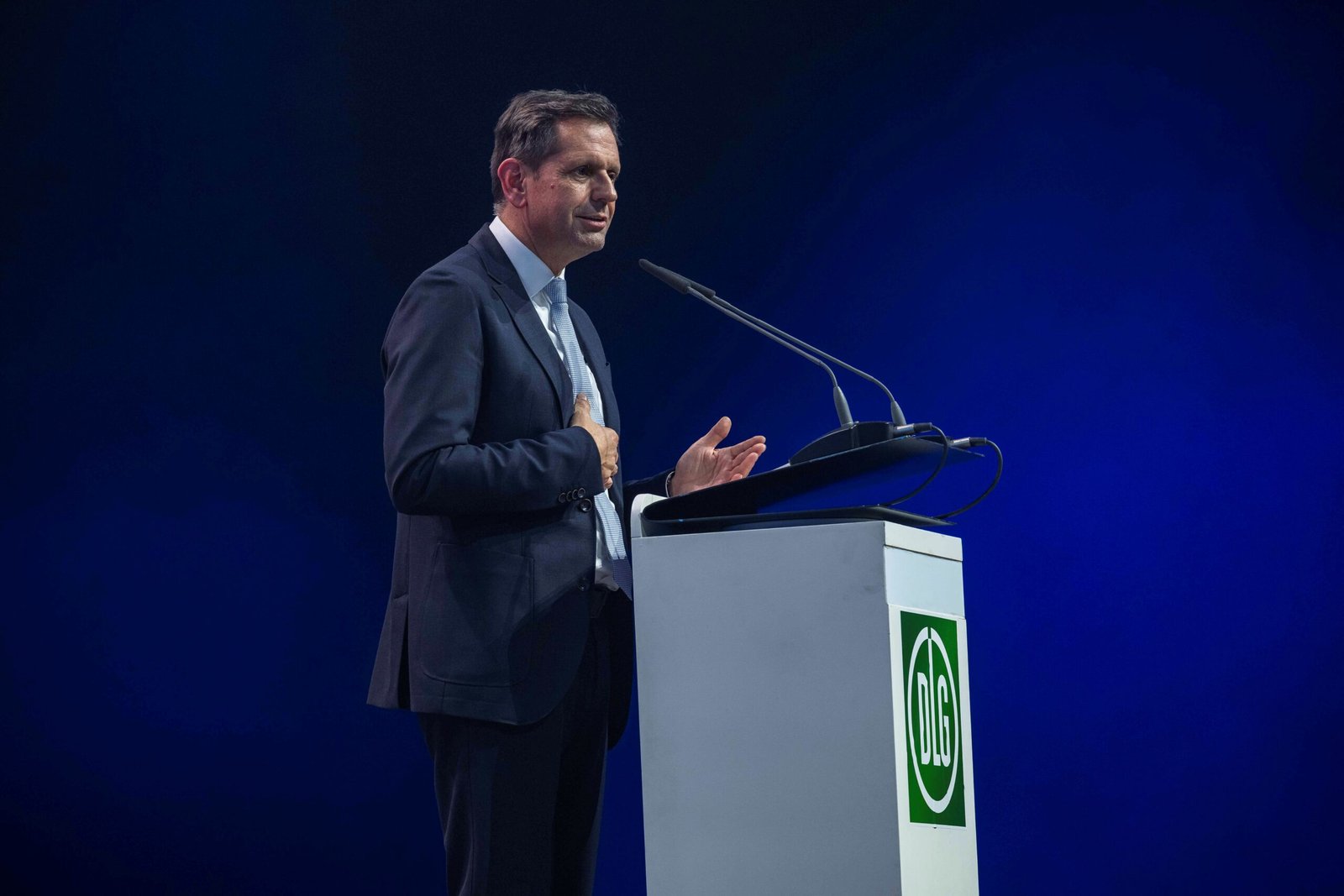
Intelligent technologies, digitalization and artificial intelligence are opening up new opportunities to strengthen farm competitiveness, further improve animal health and animal welfare, support daily operations and use resources more efficiently. What matters is that innovation delivers tangible benefits to farmers and succeeds in practice.
EuroTier demonstrates how agriculture, science and industry are working together to develop solutions for tomorrow’s challenges. Lower Saxony supports this path through reliable framework conditions and as a strong partner of the agriculture and food sectors. Important impulses for the future of livestock farming in Germany and far beyond are therefore emerging from Hanover.”
Prof. Dr. Heinz Bernhardt, Chair of the EuroTier Innovation Award Commission: Digital Animal Monitoring, AI-Based Analytics and Automation Are Converging into Integrated Systems
Prof. Dr. Heinz Bernhardt, Chair of the independent EuroTier Innovation Award Commission, outlined the work of the jury and the requirements for future-oriented innovations:
“I look forward to exchanging ideas with experts from around the world. An innovation only becomes real progress when it proves itself in everyday farm practice. It must be practical, improve operational efficiency and strengthen animal health and welfare.
As an independent innovation commission, we thoroughly assessed 175 recognized innovations from a variety of expert perspectives. Four received Gold Medals and 26 received Silver Medals.
We are aware of our responsibility toward livestock professionals worldwide. Our awards are intended to highlight practical solutions and provide guidance to the industry. The Animal Welfare Award adds a further dimension by recognizing innovations that support higher animal welfare standards.
Among the innovations of 2026, we see digital animal monitoring, AI-supported analytics and automation increasingly converging. Systems are linking animal and operational data with housing technologies and feeding systems to enable more responsive management. I look forward to experiencing these developments with you and discussing how they can help future-proof livestock farming.”
Tobias Peselmann, Chair of the EnergyDecentral 2026 Innovation Commission: Combining Livestock Farming and Renewable Energy Strengthens Resilience
Tobias Peselmann, Chair of the EnergyDecentral 2026 Innovation Commission and Managing Director of tpb NETZENERGIE GmbH, focused on this year’s guiding theme, “Powering New Ideas”:
“Every innovation begins with an idea that needs energy. There can hardly be a more fitting motto for our leading trade fair.”
Renewable energy plays a strategic role in creating an independent energy supply, while the transition from farmer to energy producer is becoming increasingly tangible. According to Peselmann, the renewable energy sector has repeatedly demonstrated its ability to adapt creatively and flexibly to changing conditions:
“The sector has reinvented itself time and again, from wood combustion and biogas to agri-photovoltaics and battery storage. Businesses that combine livestock farming with renewable energy and energy storage technologies strengthen their resilience and reduce their dependence on fossil fuels.”
Peselmann also stressed that progress requires courage:
“For almost 30 years, one saying has accompanied me: ‘In the past you were considered a dreamer; today you are an expert.’ I am convinced that this will continue to be true in the future. Innovation means exploring new paths, even when they initially raise eyebrows. I look forward to an exciting and pioneering Energy Decentral 2026.”