




Clean Water, Better Poultry Performance: Managing Biofilm, Pathogens, and Water Quality with UtriCid®DW
Drinking Water: More Than Just Hydration
Water is one of the most important nutrients in poultry production, with birds typically consuming 1.5 to 2 times more water than feed. In addition to supporting hydration, water plays a critical role in temperature regulation, digestion, nutrient transport, waste elimination, and the delivery of medications, vaccines, and nutritional supplements (Arsenopoulos et al., 2026)
The quality of drinking water directly affects bird health, performance, and the effectiveness of products administered through the water system. Poor water quality and hygiene, including microbial contamination, unsuitable pH levels, excessive mineral content, and organic deposits, can impair water consumption, increase disease pressure, and reduce product efficacy (El-Sabrout et al., 2026).
To ensure optimal performance of water-soluble products, water lines must be maintained free of excessive microbial contamination, biofilm, algae, organic deposits, and mineral scale. Contaminated water lines can reduce product efficacy, interfere with product delivery and promote the survival of pathogens.
Why Water Quality Matters
One of the most common challenges in poultry drinking water systems is the development of biofilm and microbial contamination. Pathogens such as E. coli and Salmonella can colonize water lines, particularly when biofilms form inside those pipes. Biofilms protect microorganisms from disinfectants, allowing them to persist and repeatedly contaminate the water supply, subsequently affecting birds’ health and performance.
Maintaining high water quality requires regular monitoring of microbiological and physicochemical parameters, including pH, mineral content, and total bacterial count. Routine inspection, line flushing, and thorough cleaning between flocks are essential to prevent the accumulation of biofilm, mineral deposits, algae, and other contaminants.
A comprehensive water management program combining sanitation, biofilm control, water quality monitoring, and appropriate water treatment practices helps ensure optimal bird performance, improved flock health, and maximum effectiveness of water-administered products (El-Sabrout et al., 2026).
Key Challenges in Poultry Drinking Water Systems
Water quality can be affected by physical, chemical, and microbiological contaminants that compromise bird health and the effectiveness of products delivered through the drinking water system.
Common contaminants
1. Biofilm
Biofilm is a slimy layer of microorganisms that forms on the inner surfaces of water lines and drinking systems. It acts as a reservoir for harmful bacteria, shields them from disinfectants, and can reduce the effectiveness of water-administered products. Biofilm may also restrict water flow and contribute to persistent water quality issues, making regular water line sanitation essential for maintaining optimal hygiene and performance.
2. Bacterial Contamination
Poultry drinking water systems can harbor harmful microorganisms, especially when biofilm is present or sanitation is inadequate. Common contaminants include E. coli, Salmonella, Pseudomonas, and other pathogenic bacteria. Their presence can increase disease pressure, negatively impact bird health and performance, and reduce the stability and effectiveness of products administered through the drinking water system.
3. Algae Growth
Algae may develop in water tanks and lines exposed to sunlight. Their presence can promote bacterial growth, contribute to biofilm formation, reduce water quality, and interfere with the effectiveness of water-administered products. Common signs include green deposits, discoloration of tanks, and visible organic buildup in the water system. Regular cleaning and protection from direct sunlight are essential to prevent algae growth.
4. Mineral Scale and Deposits
Hard water can lead to the accumulation of mineral deposits such as calcium, magnesium, iron, and manganese within drinking water systems. These deposits may restrict water flow, provide attachment sites for bacteria, interfere with product distribution, and reduce dosing accuracy. Regular monitoring and descaling help maintain efficient water delivery and product performance.
Best Practices for Effective Water Line Management
Recommended Flushing Protocol
Before applying any liquid product, the entire water system, including tanks, filters, dosing equipment, and water lines, should be inspected to ensure proper operation.
All header tanks and water lines should be cleaned and rinsed with clean water, and the system sanitized using chemical sanitizer and left for period of 72 hours when biofilm, algae, or bacterial contamination is suspected.
Whenever possible, physical (water color, clarity, odor, sediment), chemical (pH, hardness, Total Dissolved Solids, minerals content), and microbiological (Total bacterial count, coliforms count, E. coli, Pseudomonas aeruginosa) parameters should be evaluated to assess water quality and safety on a regular basis, as poor water quality can reduce the expected performance of water-administered products.
The Label Knows Best
Even the best water treatment solution will not perform as intended if it’s not used according to the manufacturer’s recommendations.
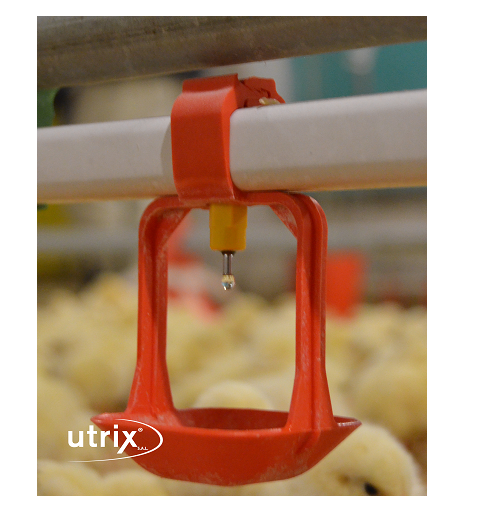
Following the correct dosage and contact time is essential to achieve the desired results while protecting the drinking water system. Using a product for a short period may compromise its effectiveness, while excessive exposure may affect equipment durability. Before every application, take a moment to review the label instructions and ensure the product is being used at the right time, under the right conditions, and for the intended purpose.
UtriCid®DW: A Comprehensive Solution for Water Quality and Safety
To address water hygiene challenges, UtriCid®DW was formulated as a synergistic blend of organic acids and copper sulfate designed to improve drinking water quality, support microbial control, and help maintain clean waterlines through biofilm and algae management. This contributes to a healthier production environment and supports optimal animal performance throughout the production cycle.
Field Validation: UtriCid®DW Under Commercial Conditions
In 2026, UTRIX conducted a commercial field trial in 60,000 Ross 308 broilers to evaluate the effectiveness of UtriCid®DW at 250 mL/1,000 L of drinking water compared to a Negative Control. UtriCid®DW was administered via drinking water during three key growth phases (days 9 – 11, 19 – 22, and 25 – 29), with each treatment period initiated 24 hours after vaccination. UtriCid®DW induced significant reduction in pH levels and demonstrated very good water sanitation efficacy, eliminating detectable levels of E. coli, total coliforms, and fecal coliforms in the three growth phases. Total bacterial count (TBC) was reduced by 2 logs in comparison to pre-treatment samples. Bacterial contamination remained present in the negative control group (Table 1).
The improvement in water hygiene was accompanied by enhanced flock performance. As shown in Figure 1, birds receiving UtriCid®DW achieved a higher European Production Efficiency Factor (EPEF) than Negative Control. These results highlight the importance of effective water sanitation in supporting both water quality and production performance.
Table 1. Effect of UtriCid® DW (250 mL/1,000 L) on water quality compared to the Negative Control.
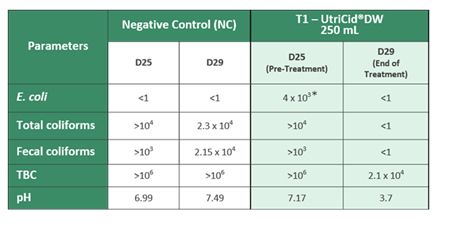
*The elevated baseline E. coli count in UtriCid® DW house was attributed to contamination present in the drinking water lines before treatment.
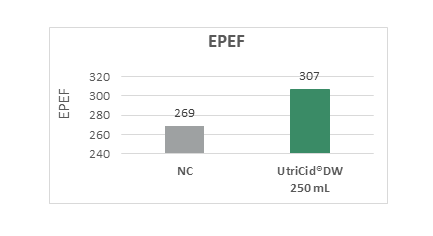
Figure 1. Effect of UtriCid® DW (250 mL/1,000 L) on performance compared with the Negative Control.
Continuous Treatment of Drinking Water
To maintain optimal water hygiene throughout the production cycle, continuous treatment of drinking water is recommended. As part of a comprehensive water management program, UtriCid®DW:
- Controls bacterial and fungal contamination in drinking water
- Prevents biofilm formation and maintain clean water lines
- Reduces water hardness and improve water quality
- Eliminates algae through the synergistic action of copper sulfate and organic acids
- Improves water intake, gut health, litter quality, and overall flock performance
By ensuring cleaner and safer drinking water, UtriCid®DW contributes to improved water system hygiene and helps poultry producers achieve consistent production results.
References
Arsenopoulos, K. V., Diakidi, D. S., Katsarou, E. I., Michalopoulou, E., Papadopoulos, E., O’Doherty, J., Vlasiou, M., & Fthenakis, G. C. (2026). Water in Livestock and Poultry Nutrition: A Review on Consumption and Quality. Water, 18(9), 1072. https://doi.org/10.3390/w18091072
El-Sabrout, K., Buonaiuto, G., Cavallini, D., & Mishra, B. (2026). Recent advancements to improve drinking water quality in poultry farms. Poultry Science, 105(4), 106523. https://doi.org/10.1016/j.psj.2026.106523