














Born Exposed: Mycotoxins in breeder are already stealing performance from chicks

By: Dr. Arnau Vidal ( Global Technical Manager – Toxins & Stress Innovad Group)
Invisible, Inherited Risk
Vertical Mycotoxin Transfer Proven
- Vertical transfer reduces performance by impacting early growth, resilience, uniformity and survival.
- Reducing chronic breeder exposure delivers measurable results: broiler body weight increased significantly by 7%, and breeder mortality was reduced by 50%.
- Protecting breeders protects broilers, producing healthier, stronger, better-performing chicks.
- Only blood biomonitoring can measure vertical transfer, feed analysis cannot show what truly reaches the embryo.
EXPOSURE BEGINS BEFORE HATCH
Several mycotoxins, including aflatoxin B₁, deoxynivalenol, zearalenone, fumonisins and emerging Alternaria toxins such as tenuazonic acid, have been detected in eggs and embryonic tissues when hens ingest contaminated diets. This confirms that exposure begins before hatch, as toxins circulating in the breeder hen are deposited directly into the yolk or albumen. This mechanism, known as vertical transfer, is much speculated about still underestimated in broiler production.
Feed analysis has long been the standard approach for assessing mycotoxin risk in broiler production. However, research now shows that this method provides only a partial picture. Exposure does not begin when chicks start consuming their diet; it starts much earlier. The embryo is already exposed during its most vulnerable developmental stage, when detoxification systems are immature and even low levels of toxins can have disproportionate biological effects.
Importantly, vertical transfer does not pose a food-safety concern for humans. The concentrations detected in eggs or embryos remain below regulatory thresholds. Its true significance lies elsewhere: understanding that mycotoxin exposure in broiler production starts in the breeder feed, long before chicks reach the farm or ingest their first feed.
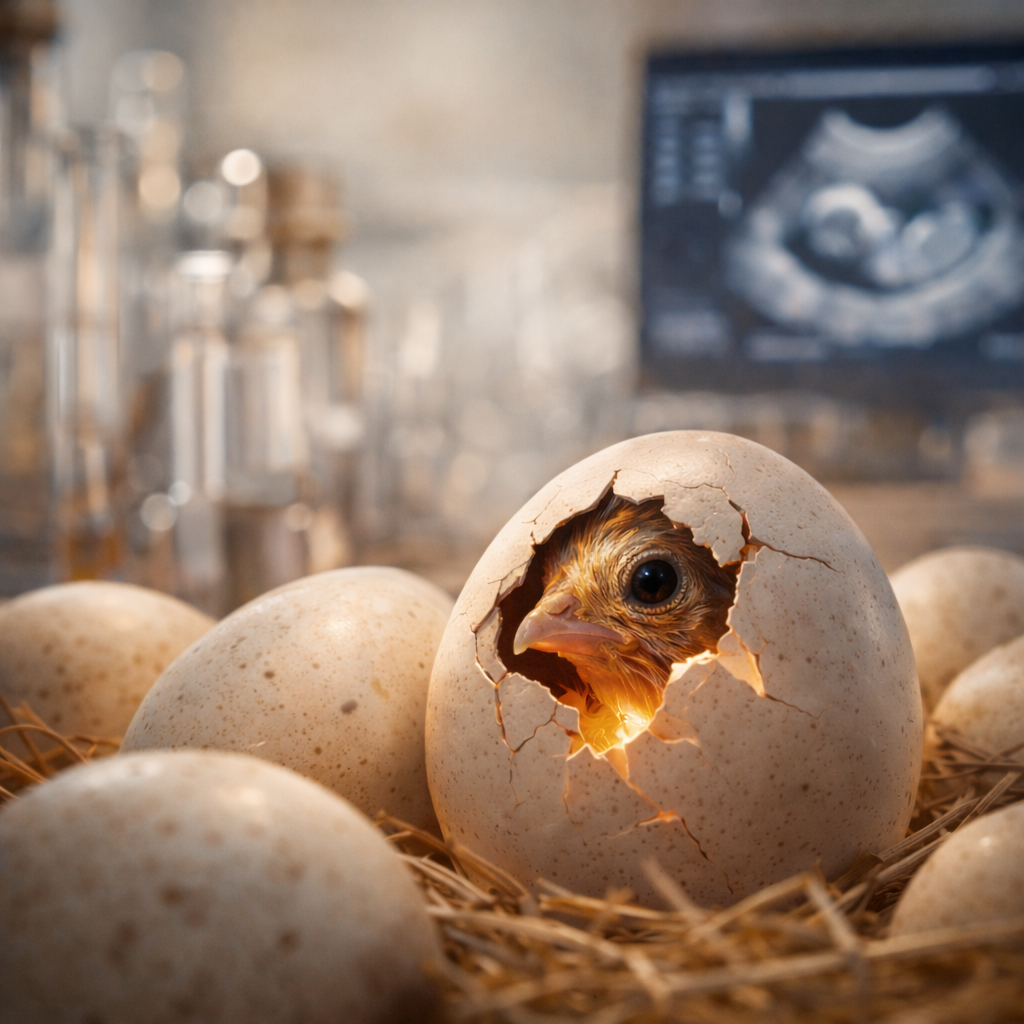
Only Blood Can Detect Mycotoxin Exposure Before First Feed
Innovad’s Biomonitoring+ program has made it possible to analyze more than 300 blood samples from day-old chicks (DOC) that had not consumed any feed. Despite having no dietary exposure, over 75% of these samples contained detectable mycotoxins or metabolites. This finding fundamentally changes our understanding of early exposure: chicks are not starting clean, they are starting already exposed.
Blood biomonitoring reveals what feed analysis cannot: the real, biologically absorbed toxin load that reaches the embryo. Across multiple farms, the same compounds detected in breeder hens also appear in their day-old chicks, often at comparable trace concentrations. This breeder–chick correlation demonstrates a consistent pattern: toxins circulating in the hen are transferred into the egg and reach the embryo throughout development. Feed analysis alone cannot uncover this phenomenon. Only blood analysis can reveal whether the breeder truly absorbed these compounds and whether they crossed to her progeny.
In short, vertical transfer is the rule, not the exception, and blood biomonitoring is the only tool capable of detecting this early-life exposure before chicks ever access their first feed.
Damage Before Day One:
The Toxic Cost of Vertical Transfer
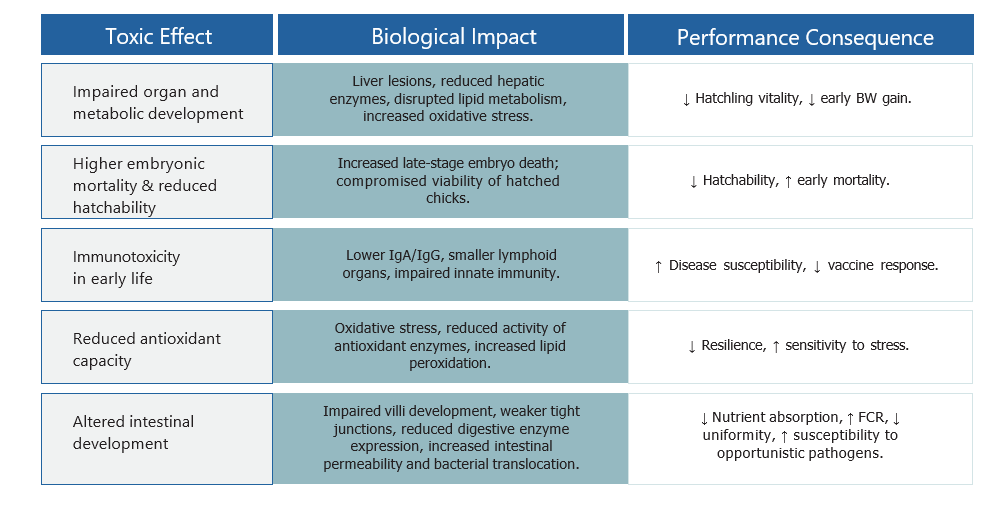
Vertical transfer ensures that the embryo begins life already exposed to the mycotoxins circulating in the breeder hen. Although the concentrations detected in day-old chicks are often low, the chick is uniquely vulnerable: its liver, kidneys and antioxidant defences are still developing, leaving it with very limited capacity to detoxify or eliminate contaminants. As a result, even modest maternal exposure can trigger disproportionate biological and performance effects during early development.

1- Impaired Development & Early Growth
Mycotoxin exposure during embryogenesis disrupts normal development, affecting organ formation and overall vitality at hatch. These setbacks lead to lower hatchling weight and slower body-weight gain in the first 7–14 days — a key predictor of final flock performance. These effects are driven by underlying changes in liver development, reduced metabolic capacity and increased oxidative stress in embryonic tissues.

2- Weakened Immunity & Resilience
Vertical transfer compromises early immune development, reducing IgA, IgG and IgY, impairing lymphoid organ maturation and weakening innate immune defences. Embryonic exposure to deoxynivalenol and zearalenone also reduces antioxidant enzyme activity, increasing vulnerability to post-hatch stressors. As a result, chicks start life with a fragilized and immature immune system, making them far more prone to pathogens, dysbiosis, vaccine failures and early-age stress (heat, transport) before their own immunity becomes stable and fully functional.
3- Altered Intestinal function & Feed Efficiency
Mycotoxins reaching the embryo impair villi formation, tight-junction integrity and enzyme expression, limiting early nutrient absorption. Compromising tight-junction integrity is particularly critical, as it increases intestinal permeability, facilitates bacterial translocation across the gut barrier, and predisposes chicks to secondary problems caused by opportunistic pathogens such as Enterococcus. Studies show a consequent deterioration in feed conversion (FCR) in progeny originating from contaminated breeders.
4- Reduced Viability & Uniformity
Exposure in ovo increases late embryo mortality and reduces hatchability. Surviving chicks often hatch with variable degrees of impairment, resulting in poorer flock uniformity, a key driver of processing efficiency. Higher early mortality and culls have also been linked to embryonic aflatoxin, deoxynivalenol and zearalenone exposure.
Vertical transfer becomes the first limiting factor of broiler performance, before feed formulation, farm management or health programs can influence outcomes.
Table 1:
Toxic effects of vertical transfer on embryonic and early-life development.
A Trial Confirmed It: Lower Maternal Toxins Mean Better Chick Performance
To evaluate the practical relevance of vertical transfer and the effectiveness of reducing systemic exposure in breeders, a controlled field study was performed using commercial broiler breeders and their progeny. The study compared during 1 month a control group with a group receiving a detoxifier technology (Escent® S) incorporated into the breeder diet (1kg/T of feed).
At the start of the study, both groups showed a similar systemic contamination profile, with tenuazonic acid as the predominant circulating toxin. After one month on the supplemented diet, breeders showed a substantial reduction in tenuazonic acid levels, dropping from 6.1 ppb in the control group to 3.8 ppb in the supplemented group. This represents a 38% lower toxin concentration in breeder blood (table 2). This clear downward shift demonstrates that the nutritional strategy reduced the toxin load circulating in the breeders, capturing an improvement that feed analysis alone cannot reveal. Although the tenuazonic acid levels detected were far below those associated with acute toxicity, they are consistent with chronic exposure, which is known to negatively affect health status and performance in breeders. As the supplemented group showed a 38% reduction in circulating tenuazonic acid, this lighter toxic burden translated into a clear biological benefit: breeder mortality was reduced by 50% compared with the control group. This highlights how even moderate decreases in chronic exposure can markedly improve flock resilience.
Table 2
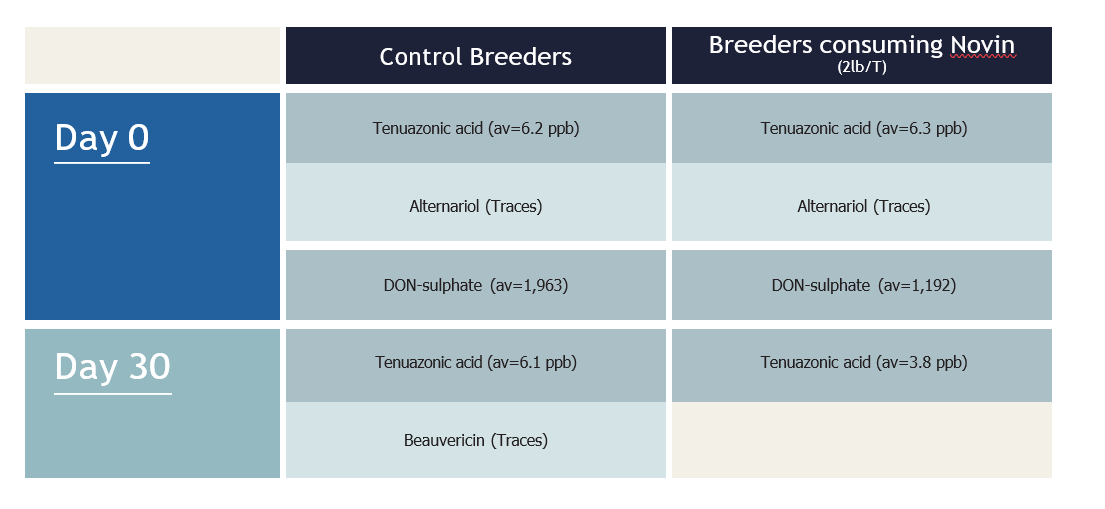
Blood mycotoxin levels in breeders at day 0 and day 30 in control and supplemented groups.
Reducing the maternal toxin burden translated directly into better early performance of the progeny. Chicks originating from breeders with lower systemic exposure showed clear advantages from the first days of life. After seven days, chicks from the breeders consuming Escent® S were significantly heavier (7%) than the control group (p = 0.004). This early advantage continued during the second week (4% higher body weight in group coming from breeders consuming Escent® S) (figure 1). The group from breeders consuming Escent® consumed slightly more feed, but FCR remained identical between groups, indicating that the additional growth did not come at the cost of efficiency.
Taken together, these results show that lowering the toxin load in breeders has immediate, measurable benefits for their progeny—improving early growth and maintaining feed efficiency during the most vulnerable phase of the broiler cycle.

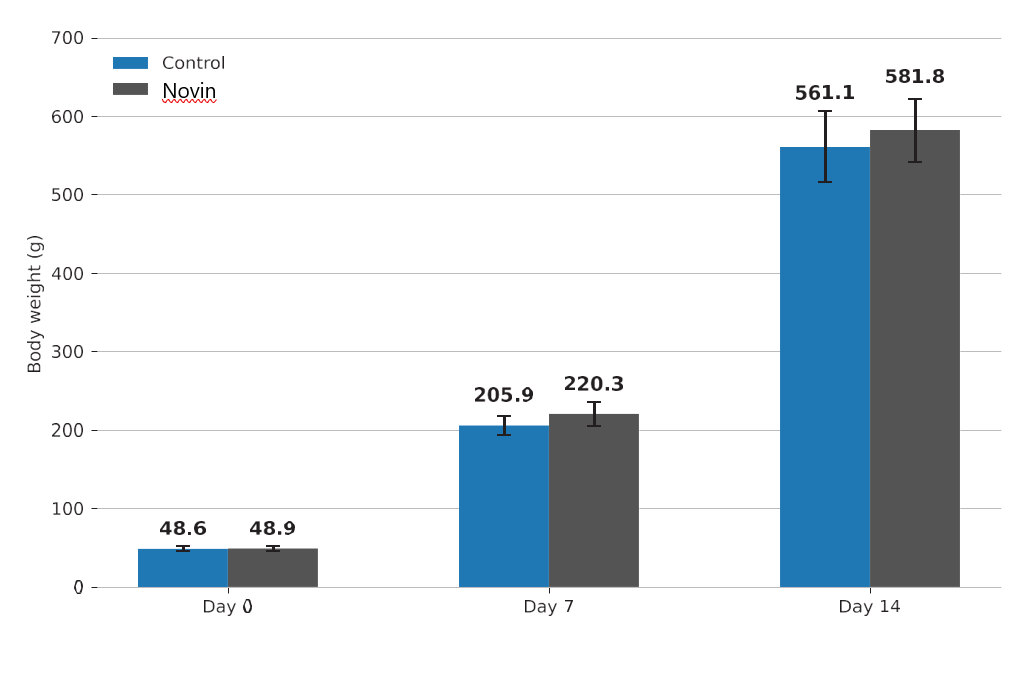
Figure 1. Body weight (g) of progeny at day 0, 7 and 14 from the control group vs chicks group from breeders consuming Escent® S.

Conclusion
Vertical transfer is a widespread and underestimated source of mycotoxin exposure in broiler production. Blood biomonitoring is the only tool capable of detecting this early-life exposure, revealing that many chicks begin life already carrying toxins absorbed by the breeder. Even moderate maternal contamination can impair development, resilience and early performance. Reducing the toxin burden in breeders lowers vertical transfer and delivers measurable benefits for both breeders and their progeny. Strengthening broiler performance therefore begins by controlling exposure at the breeder level.